
Research Profile
Research Experience
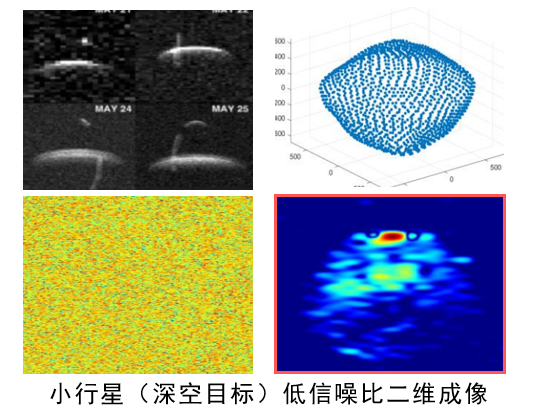
Self-Supervised Learning for Image Enhancement and Reconstruction
Developed self-supervised and learning-based image reconstruction methods for noisy, sparse, and incomplete observations, with emphasis on structural preservation, adaptive masking, and multi-view consistency.
- Self-Supervised Learning: Developed image denoising and enhancement methods without requiring clean reference images.
- Adaptive Masking: Designed scattering-aware adaptive masking strategies to encourage learning from surrounding spatial context in noisy observations.
- Multi-view Consistency: Exploited cross-view consistency to improve image enhancement and reconstruction robustness.
- Structure Preservation: Designed structure-aware learning methods to suppress noise while preserving fine image features and target structures.
- Sparse Reconstruction: Developed physics-aware reconstruction methods for sparsely sampled and incomplete observations.
- 3D Reconstruction: Developed multi-view reconstruction methods and explored NeRF/3DGS-based approaches for sparse observations.
UAV-Based Imaging and 3D Reconstruction
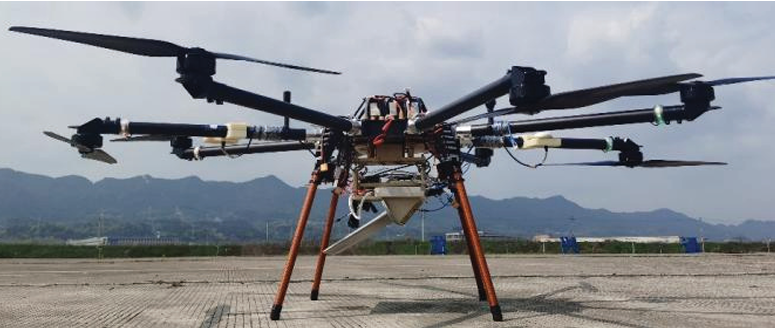
Developed image processing, self-supervised enhancement, and multi-view 3D reconstruction methods using large-scale real-world sensor observations.
- Data Acquisition: Conducted 40+ UAV sorties at 170–260 m for real-world sensing and data collection.
- Image Enhancement: Developed self-supervised denoising methods, improving image SNR by 10–15 dB.
- 3D Reconstruction: Developed multi-view reconstruction methods using ADMM-based learning and 3DGS, achieving sub-meter reconstruction accuracy.
- Real-World Validation: Conducted 100+ experiments on TB-scale real sensor data collected in complex environments.
Multimodal Radar and Vision for Human Activity Recognition
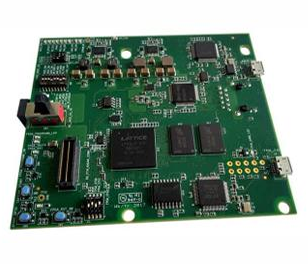
Developed a multimodal sensing and learning framework for human gesture recognition, covering data acquisition, feature extraction, multimodal fusion, and learning-based classification.
- Data Acquisition: Built an AWR1642 radar sensing system and constructed a dataset covering 10 gesture classes.
- Feature Extraction: Extracted temporal motion features and visual representations for human activity modelling.
- Multimodal Fusion: Developed a dual-branch network to integrate complementary features for dynamic gesture classification.
- Results: Achieved >94.5% recognition accuracy through data augmentation and model optimization.
Selected Publications & Patents

Scattering-Aware Multi-View Masked Networks for Self-Supervised Radar Denoising
IEEE Transactions on Geoscience and Remote Sensing | First Author
Under Review
A Self-Supervised Radar Sparse Imaging Method via Physics-Aware Imputation Network
IEEE Transactions on Aerospace and Electronic Systems | First Author
Under Review
An Adaptive 3-D Reconstruction Method for Targets Based on Multi-view Self-supervised Framework under Low SNR
IEEE Transactions on Geoscience and Remote Sensing | First Author
Under Review
A Parametric 3-D ISAR Imaging Method of Celestial Target Under Low SNR
IEEE Transactions on Geoscience and Remote Sensing | Co-author
Published
Multi-Dimensional Spread Target Detection with Across Range-Doppler Unit Phenomenon Based on Generalized Radon-Fourier Transform
Remote Sensing | First Author
Published
Sensor Denoising Method Based on Self-Supervised Learning
Chinese Invention Patent | First Student Inventor
Granted
Method for Multi-view 3D Sensing under Low SNR
Chinese Invention Patent | First Student Inventor
Granted
Self-Supervised Image Denoising Method Based on an Adaptive Masking Strategy
Chinese Invention Patent | First Student Inventor
Patent Application
Image Reconstruction Method Based on a Self-Supervised Inpainting Network
Chinese Invention Patent | First Student Inventor
Patent ApplicationEducation
Relevant Coursework: Signals and Systems, Digital Signal Processing, Communication Principles.
Technical Skills
-
Self-Supervised Learning
- Self-supervised denoising
- Adaptive masking
- Multi-view consistency
- Learning without clean reference images
-
Deep Learning
- Transformer
- Diffusion models
- CNN-based models
- Feature representation and fusion
-
Image Processing
- Image enhancement and denoising
- Structure-preserving restoration
- Sparse image reconstruction
- Physics-aware reconstruction
-
Challenging Observations
- Noisy observations
- Sparse and incomplete measurements
- Low-SNR image reconstruction
-
3D Reconstruction
- Multi-view reconstruction
- Sparse-view reconstruction
- NeRF
- 3D Gaussian Splatting (3DGS)
- ADMM-based deep unfolding
-
Multimodal Data Processing
- Multi-source sensor data
- Feature extraction and integration
- Cross-view information fusion
-
Programming
- Python / PyTorch
- MATLAB
- C / C++
-
Tools & Experiments
- MeshLab / COLMAP
- CST Studio / FEKO
- mmWave radar / LiDAR
- UAV-based data acquisition
- Real-world sensor experiments
Honors & Awards
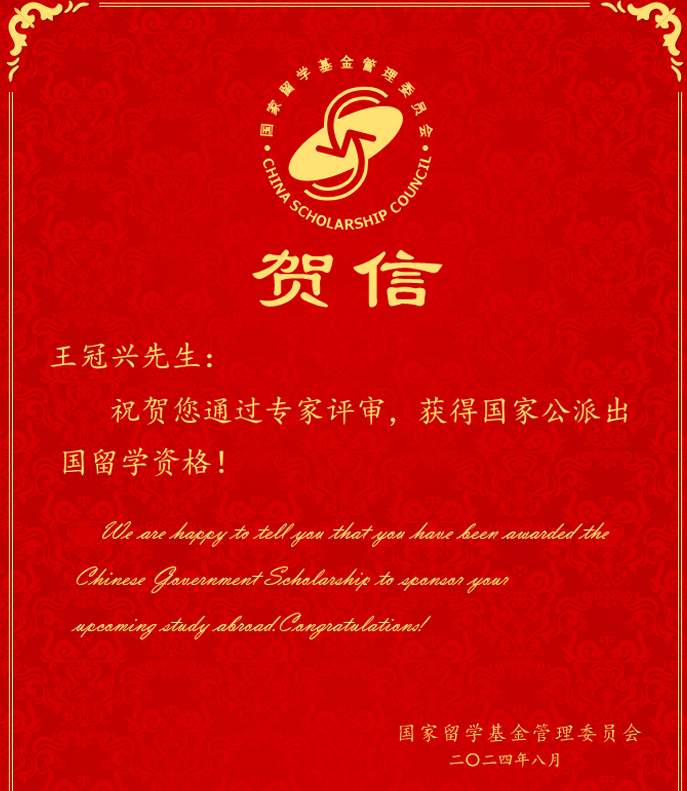
China Scholarship Council Scholarship
Funded visiting PhD research at the University of Auckland.

Beijing Outstanding Graduate
Recognized for outstanding academic achievement and comprehensive performance.

First-Class Scholarships
Received multiple municipal- and university-level scholarships for academic excellence.

National Level-II Athlete Standard in Marathon Running
Long-term endurance athlete with 20+ races completed.

AHA / Red Cross First Aid Instructor
Certified first aid instructor with experience supporting large-scale events.

Outstanding Student Leader (3 Awards)
Recognized three times for leadership, teamwork, and contributions to student activities.
Leadership & Activities
Summer Teaching Volunteer Program, China
- Initiated and organized educational outreach programs in rural areas, coordinating volunteer recruitment, curriculum design, school engagement, and team management.

American Heart Association & Beijing Red Cross
- Delivered CPR and first-aid training to more than 1,000 participants across universities, companies, and public events.
